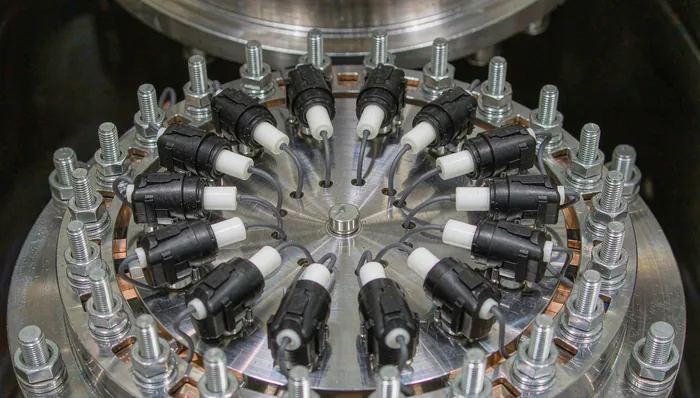
Vacuum equipment · featured
Ni201 lead wire for vacuum feedthroughs
A furnace builder needed a low-carbon lead that would not embrittle after repeated cycles at 450 °C, with a bright surface for ceramic sealing.
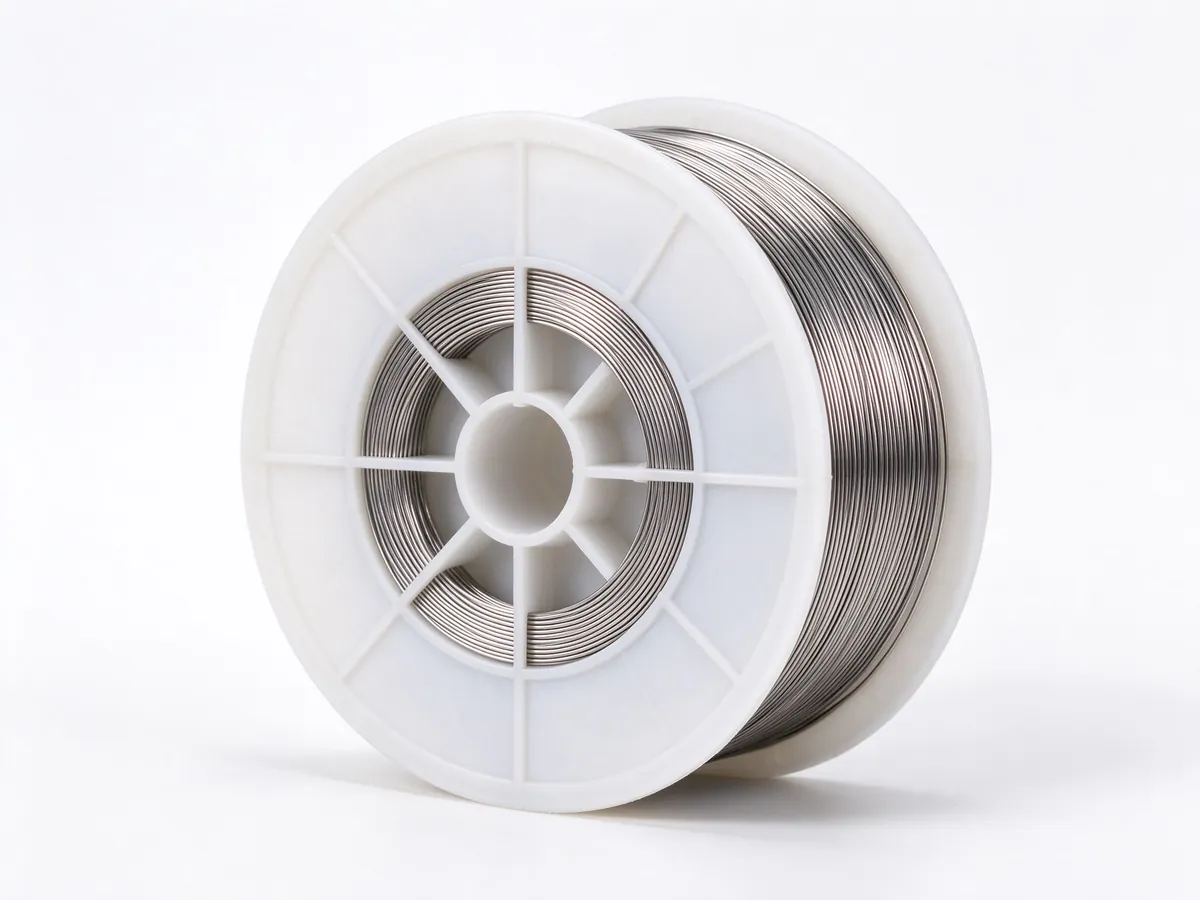
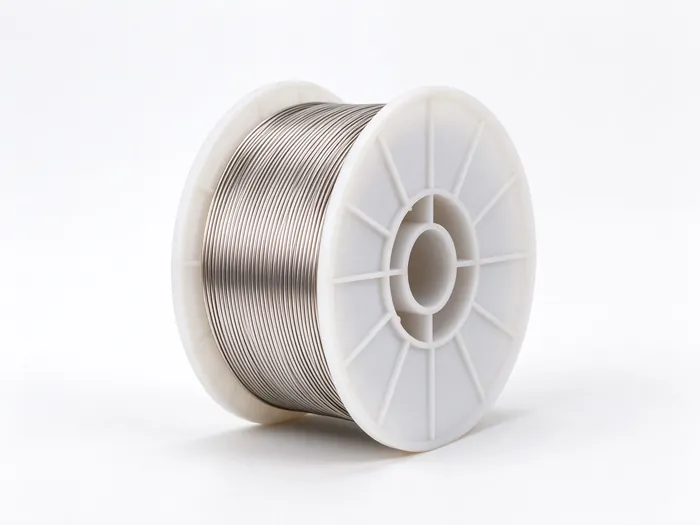
Commercial-purity nickel wire, drawn down to 0.05 mm and bright annealed in our own plant in Jiangsu. Ni200 and Ni201 grades, sold by the spool from 10 kg, with a mill test report on every shipment.
Pure nickel wire is specified where conductivity, corrosion resistance and a clean surface matter more than strength: vacuum components, battery tabs, electronic leads and caustic process equipment.
At D GO TOP, Ni200 and Ni201 are drawn from verified cathode-origin stock, bright annealed in-line and tested for resistivity, tensile strength and dimensional accuracy before spooling. Every coil leaves with a heat number that traces back to its test report — so the certificate matches the spool on your line.
Grade, temper and diameter are chosen together. Our engineers review your drawing, working temperature and forming process before a specification is confirmed.
General corrosion resistance and high conductivity for parts that stay below 300 °C.
Avoids graphite precipitation above 300 °C — the default for annealed and welded parts.
For sensor leads, vacuum feedthroughs and fine windings where diameter sets the current path.
Soft, quarter-hard or spring temper; spool weight, bore and label set to your feeding line.
Draw benches are set per range, so a fine sensor lead and a 3 mm electrode do not compete for the same pass schedule.
Drawn on wet lines with in-line diameter feedback, so tolerance holds across the full spool, not just at the start.
The workhorse range: bright annealed, straight enough to feed automatically and ductile enough to form without cracking.
For terminals, busbar links and machined electrode parts, supplied annealed or straightened and cut to length.
Not sure which temper your forming process needs? Send us the drawing — we review it before quoting.
Discuss your requirement →Two commercial grades cover most applications; high-purity 4N and flat wire are supplied on request.
Need a grade or size that is not listed? Send your specification — our engineers confirm availability and test values before you order.
Tolerance is agreed against your drawing, not a catalogue default. Before quoting we confirm what is measurable, and what the draw schedule can hold on your diameter.
Typical values for annealed Ni200 are listed here as a reference; final figures are confirmed on the test report for each heat.
P4 and P5 are our in-house diameter-tolerance classes, not ISO 286 IT grades or a GB/T designation: P5 is the general-purpose band and P4 the tighter precision band — at 1.0 mm roughly ±2% and ±1% of diameter, which is about ±4% and ±2% on resistance. The band that applies to your order is printed on the quotation.
Round wire, cold drawn
Roundness across the section
Annealed Ni200, typical
Annealed condition
Ni200 at 20 °C
Oxide-free, bright
Temper and packing decide how the wire behaves on your line, not just how it arrives.
Oxide-free bright finish with good formability — the standard for vacuum and electronic parts.
StandardLowest yield strength for tight bending, coiling and winding without spring-back.
FormingHigher tensile strength for parts that must hold shape under load.
Spring temperDrawing lubricant removed for vacuum, battery and cleanroom-bound components.
CleanlinessSpool weight, bore and traverse set to your feeding equipment, labelled per box.
PackagingCut and packed in fixed lengths for automated assembly lines.
ProductivityFinish and packing availability depends on diameter, temper and order quantity. Custom spool labels and neutral packing can be reviewed before production.
Five controlled steps, each with a named output — so nothing is agreed verbally and lost between shifts.
We check grade, size, temper, tolerance, packing and delivery date against what the drawing actually needs — and flag anything the process cannot hold.
Ni200 / Ni201 confirmed against your existing grade number, with datasheet and typical test values issued before the order is placed.
Multi-pass drawing to the ordered diameter, with in-line diameter feedback on each pass and a controlled surface through the die sequence.
Continuous annealing under protective atmosphere restores ductility and holds resistivity, instead of the batch-to-batch drift of open furnaces.
Chemistry, mechanical properties, dimensions and surface checked against the order, then packed for export with the documents inside the case.
Four application groups where conductivity, corrosion resistance or vacuum cleanliness decide the grade.
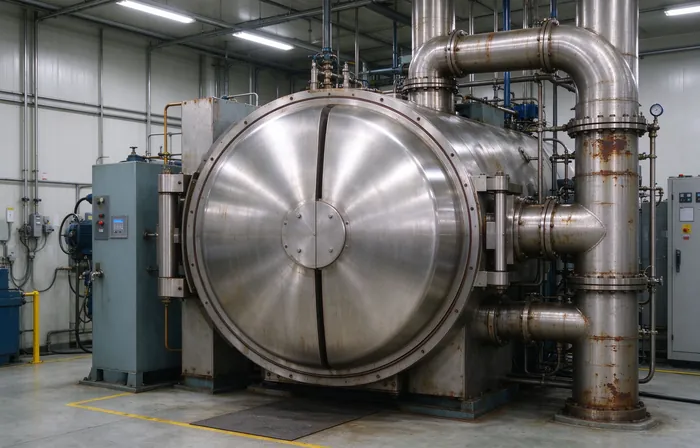
Low gas content and a clean surface for parts that sit inside a vacuum chamber.
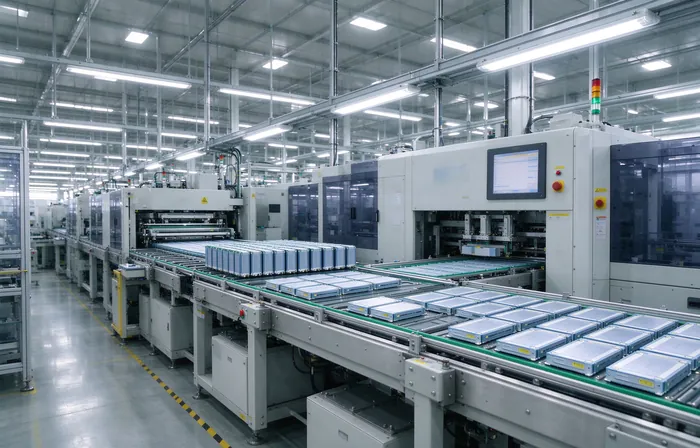
Stable conductivity and clean weldability for cell and component assembly.
Resistance to caustic soda and many neutral salt solutions, where steel fails.
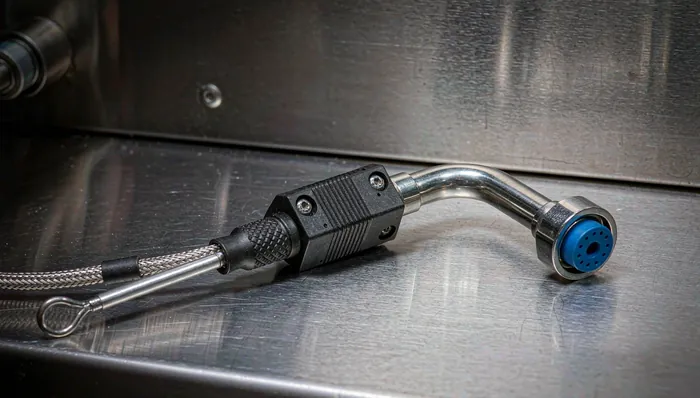
Predictable resistivity for measurement circuits and low-power heating.
Nickel wire problems are rarely metallurgical — they come from undocumented handovers between mill, trader and user. We removed the handovers.
Send an existing grade number or a specification; we confirm the nickel equivalent and the test values behind it.
Wet and dry drawing lines with in-line diameter feedback, so fine sizes hold tolerance across the whole spool.
Continuous annealing holds temper and resistivity, instead of varying from batch to batch.
Resistivity, tensile, elongation and dimensional checks recorded against the heat number you receive.
EN 10204 3.1 mill test report and certificate of conformity, with RoHS / REACH declarations on request.
Standard sizes from 10–20 kg, then repeat production without re-qualifying a new supplier.
Grade, diameter and temper chosen for the working condition — not for what happened to be on the shelf.
A furnace builder needed a low-carbon lead that would not embrittle after repeated cycles at 450 °C, with a bright surface for ceramic sealing.
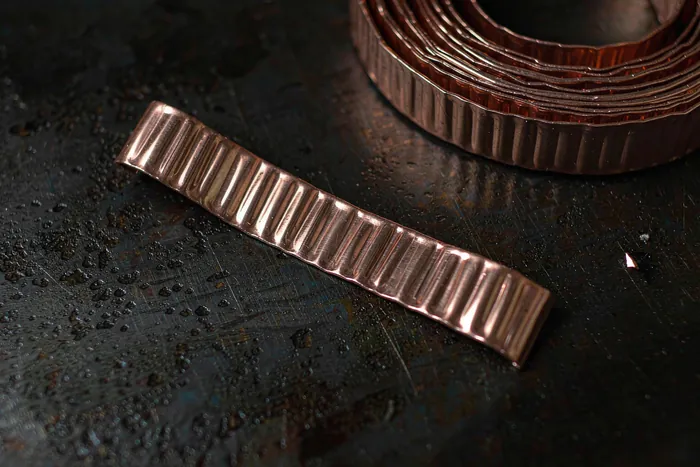
Flat nickel wire for cell tabs, supplied soft annealed and cut to length so the tab line could weld without an extra straightening step.
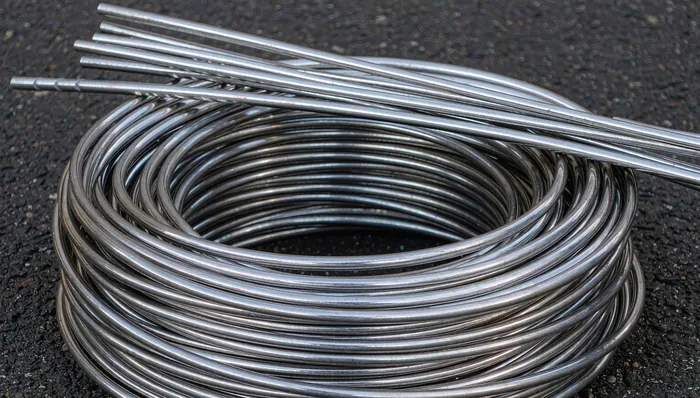
Caustic service electrode wire, supplied annealed on 25 kg coils with the heat number written through to each coil label.
Tell us the grade, diameter, temper and quantity — or send the drawing you already have. An engineer reviews it and you get a factory-direct quotation with lead time inside 24 hours.
The questions buyers and engineers ask most, answered with the numbers we actually work to.
Carbon content. Ni200 carries up to 0.15% C; Ni201 is held to 0.02% max. Above roughly 300 °C the carbon in Ni200 can precipitate as graphite and embrittle the part, so Ni201 is the correct choice for annealed service, welded assemblies and furnace internals.
Ni200 and Ni201 are both 99.0% Ni min to UNS N02200 / N02201 — typical heats run about 99.6%. They differ in carbon, not in nickel content. High-purity 4N (99.9%) material is available on request for vacuum and electronic applications.
Round wire from 0.05 mm to 5.0 mm, flat wire and strip from 0.05 mm thick. Diameter tolerance is confirmed against your drawing — P5 / P4 precision grades are available on finer sizes.
Yes, with Ni201. It is the low-carbon grade specifically intended for service above 300 °C, where Ni200 would risk graphite precipitation. Tell us the working temperature and atmosphere and we will confirm the grade.
Bright annealed as standard, plus soft annealed (dead soft) and hard drawn for spring temper. Ultrasonic degreasing is available for vacuum and battery components.
An EN 10204 3.1 mill test report with heat number, chemistry and mechanical results, plus a certificate of conformity. RoHS and REACH declarations are issued on request.